Macro World: Unveiling the Intricate Details of Insect Anatomy
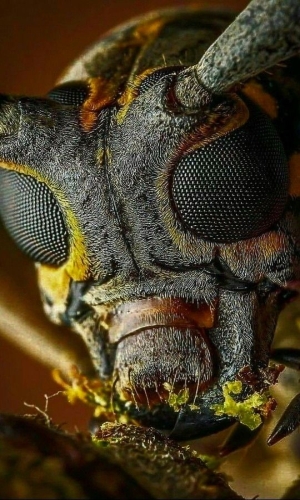
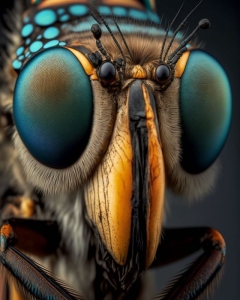
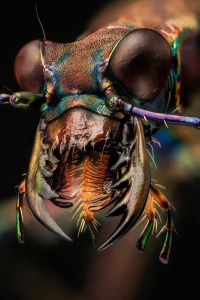
In the world of macro photography, a myriad of fascinating subjects awaits to be explored, not least of which is the intricate anatomy of insects. Delve deeper, and one is likely to come across a detailed close-up of an insect's head, a spectacle that's a testament to the marvels of nature. The insect's head, usually encased in a hard, protective exoskeleton, presents an array of textures and colours that are often overlooked by the naked eye. Its exoskeleton, a marvel of natural engineering, might seem rigid and monochromatic at first glance, but upon closer inspection, it's a canvas of delicate patterns and vibrant hues. The exoskeleton's role extends beyond mere protection, it's also crucial for the insect's mobility, sensory perception, and even communication. The insect's eyes, another integral part of its anatomy, are a study in evolutionary adaptation. They are not only capable of detecting movement with incredible speed but also play a pivotal role in navigation and hunting. The eyes' multifaceted design, composed of numerous tiny lenses, gives insects a wide field of vision, enabling them to react quickly to their surroundings. Lastly, the antennae, the subtle sensory organs that often go unnoticed, are the insect's primary means for detecting chemical signals and vibrations in their environment. The antennae's structure and function vary widely among insect species, reflecting the diverse habitats and lifestyles they have adapted to. In essence, the intricacy of an insect's anatomy, from its exoskeleton to its eyes and antennae, is a testament to the wonders of evolution and the beauty of nature's designs.