Unveiling the Intricate Structure of Neurons: The Building Blocks of the Nervous System
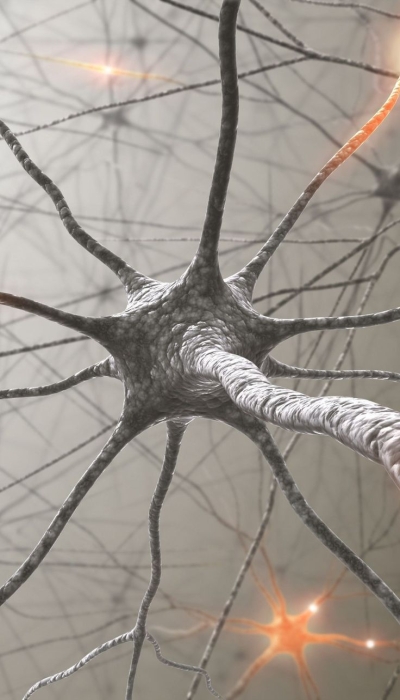
Neurons, the fundamental units of our nervous system, are marvelously complex entities teeming with life. These nerve cells are the primary architect of the vast information superhighway that constitutes our complex nervous system. Each neuron is uniquely designed with distinct structures, including a cell body, dendrites, and an axon, that enable the transmission of information throughout our body. Dendrites, with their complex arborizations, reach out like branches of a tree, capturing input signals that are then transmitted via the neuron's axon, a long, slender projection. The cell body, the neuron's command center, houses the nucleus and orchestrates the cell's overall function.The imagery of glowing elements often represents the electrical activity that is integral to the neuron's function. Every thought, movement, sensation, and emotion we experience is the result of electrical impulses traveling from one neuron to the next, creating a symphony of electrical activity that makes us who we are.But neurons do not function in isolation. Instead, they form intricate networks, creating connections that are vital for the body's communication system. These connections are not static but continually changing, adapting, and strengthening, a phenomenon known as neuroplasticity. It is this ability to forge new connections and pathways that allows us to learn, remember, and adapt.So, each neuron, with its distinct structures and functions, is not just a cell. It is a testament to the remarkable complexity and adaptability of the human body, a marvel of biological engineering that allows us to think, feel, move, and experience the world around us.