Black and White Scarab Beetle: Nature's Artistic Patterns
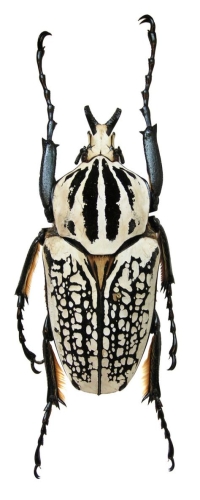
The world of beetles is full of fascinating species, and the scarab beetle is no exception. This particular specimen showcases a distinctive black and white pattern on its shell, an attribute that sets it apart in the insect realm. This unique coloration, a stark contrast between ebony and ivory, gives it an almost artistic appeal, making it a standout in both collections and scientific studies.<br /><br />Scarab beetles have long been known for their unique shapes and patterns, their diverse range of appearances adding to their intrigue and popularity. The black and white scarab beetle, with its eye-catching pattern, is a prime example of this allure. The beetle's shell, or exoskeleton, is not just a protective casing but a canvas of nature's artistry.<br /><br />The pattern on its shell is not just for show, though. In the beetle world, these patterns can serve a variety of purposes, from camouflage to attracting a mate. For the black and white scarab beetle, the stark contrast might serve to confuse predators, giving it a chance to escape when threatened. In studies, these patterns have provided invaluable insights into insect behavior and evolution.<br /><br />As a result, this beetle has become a popular subject in both collections and research. Collectors are drawn to its distinctive pattern, a naturally occurring work of art that adds value to any collection. For researchers, it offers a chance to delve into the intricacies of beetle biology and evolution, shedding light on the marvels of the insect world.<br /><br />Ultimately, the black and white scarab beetle exemplifies the beauty and complexity of the insect kingdom. Its unique pattern is a testament to nature's creativity, serving both aesthetic and functional purposes in its life cycle.