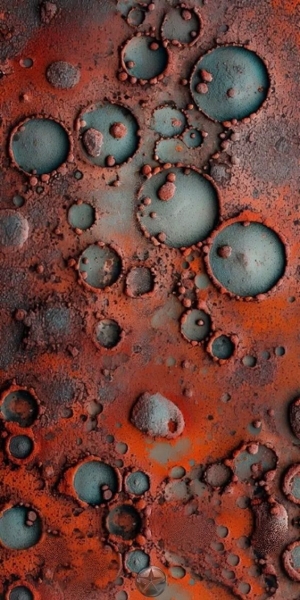
Mars-like Terrain: A Close Look at its Crater-filled Surface
Reddish, mysterious, and filled with an abundance of circular features - the Martian terrain is a fascinating study in itself. These features, reminiscent of craters or bubbles, hint at a history of geological activity that continues to intrigue astronomers and scientists alike. The reddish backdrop of Mars, a testament to its iron-rich soil, provides a stark contrast to these indentations, creating a surreal and captivating landscape.The craters, which seem to pepper the planet's surface in an almost haphazard manner, are the result of meteor impacts over millions of years. Each one, with its distinct size and shape, tells a unique story about Mars' past. Some craters are deep and well-preserved, their rims sharp against the Martian landscape. Others appear weathered and eroded due to the planet's thin atmosphere and wind activity, their shapes softened and contours blurred.The bubble-like formations are equally intriguing, often found in areas of past or current volcanic activity. These bubbles, or 'lava tubes', are formed when the surface of a lava stream solidifies, but the lava beneath continues to flow. Once the lava drains away, it leaves behind a hollow tube, offering a glimpse into Mars' fiery past.The study of these features not only unravels the mysteries of Mars but also aids in the understanding of similar geological formations on Earth. As we continue to explore and learn more about Mars, each crater and bubble adds another piece to the puzzle, bringing us one step closer to unveiling the secrets of the Red Planet.